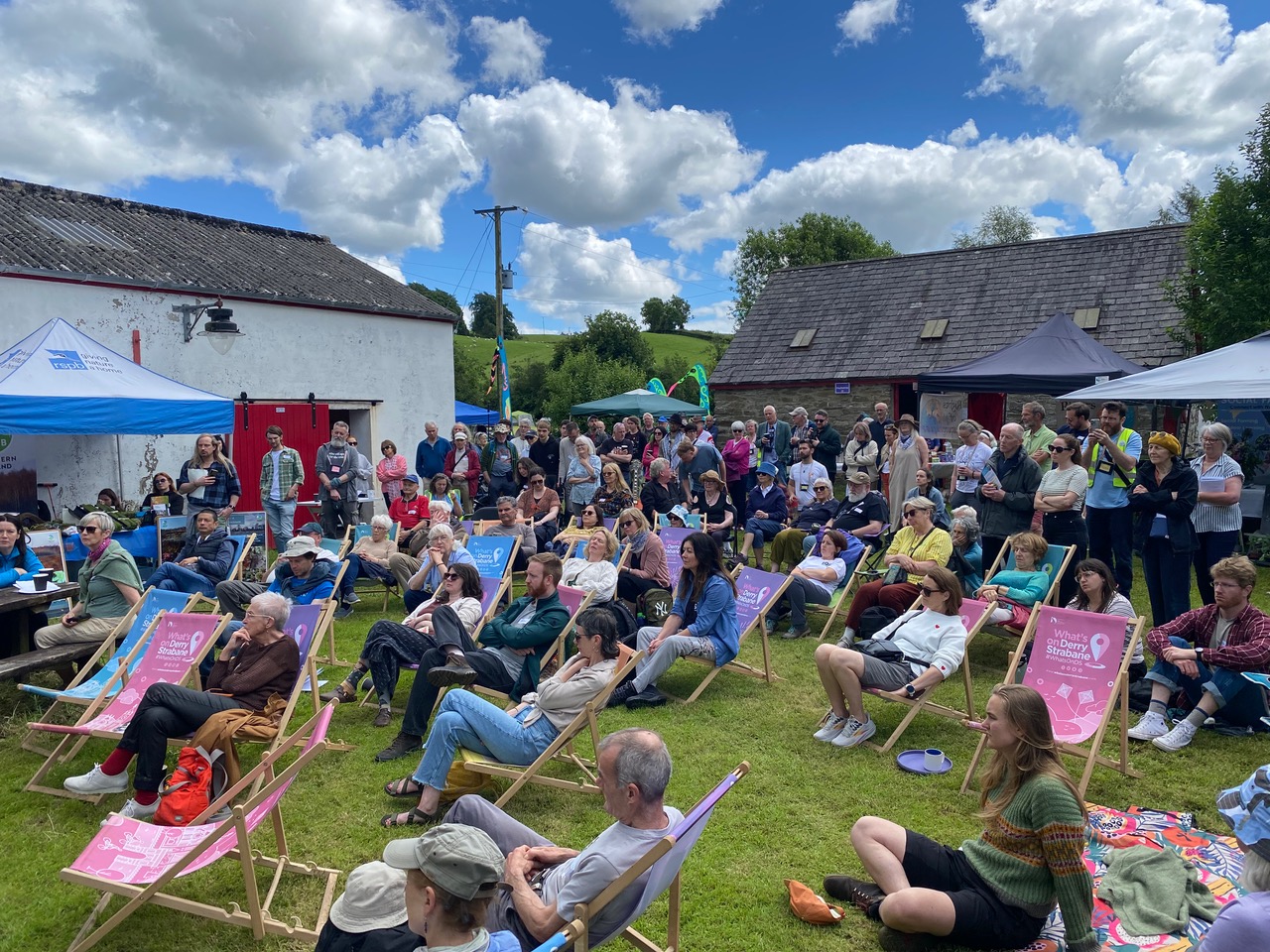
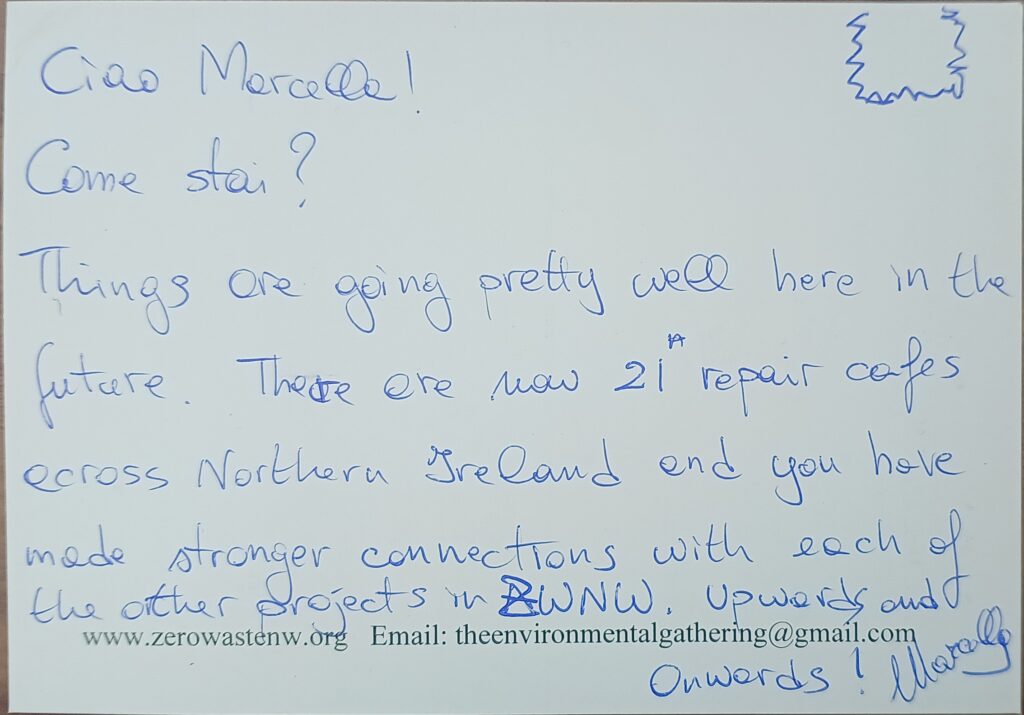
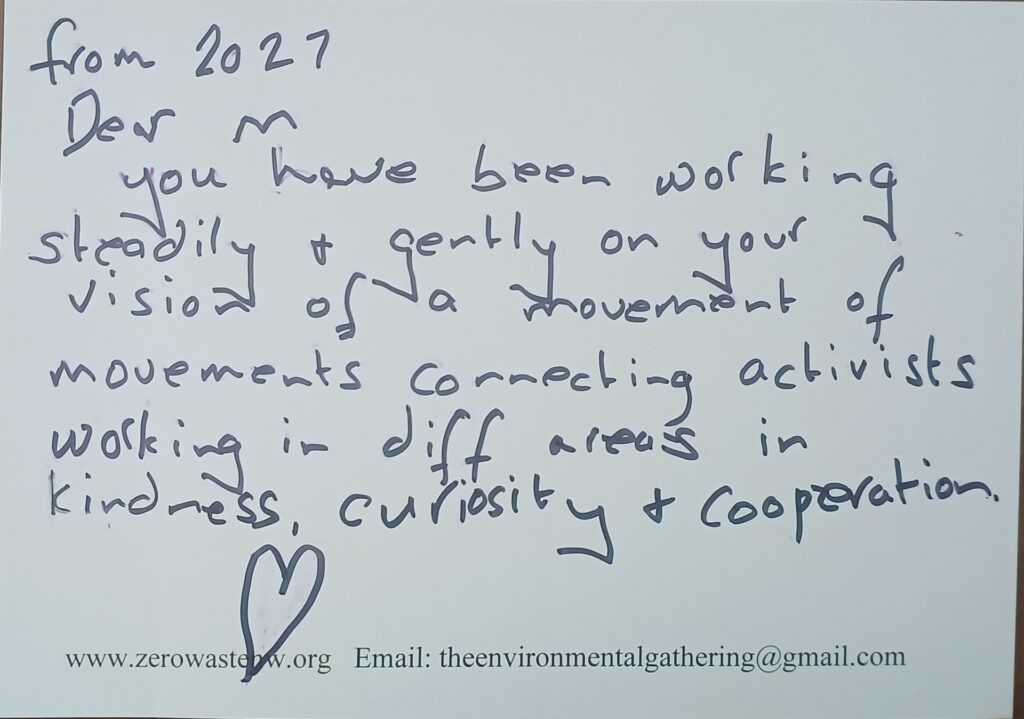
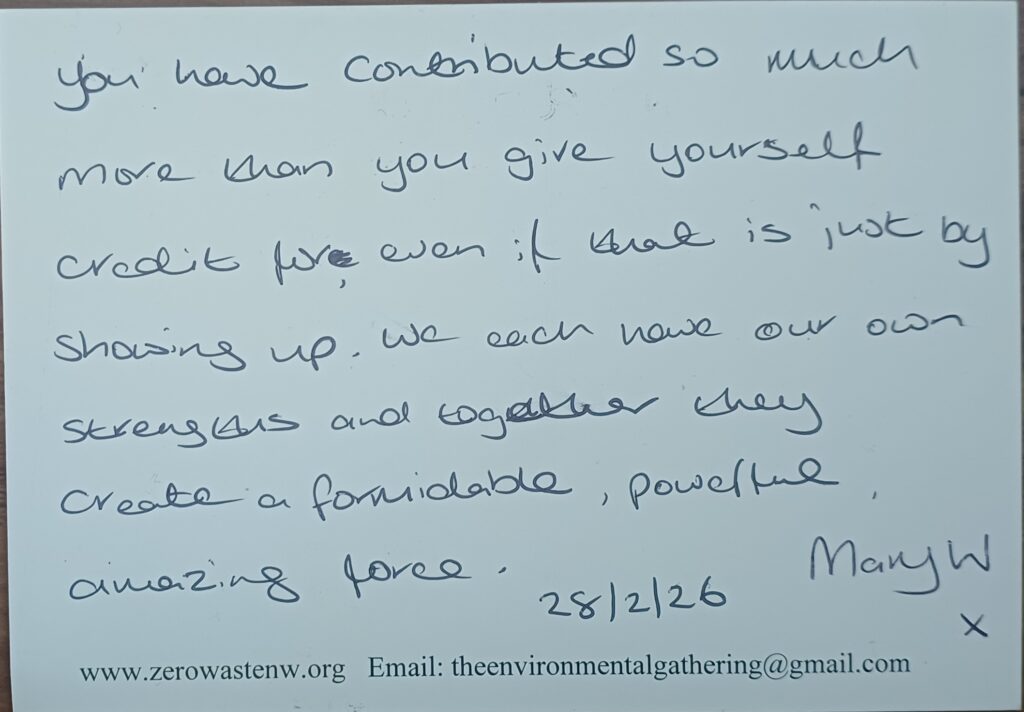
We would like to thank everyone from the bottom of our hearts for helping to make the 21st Gathering in the Sperrins such a truly special one.
First and foremost, thank you to all the Save the Moat – Save the Sperrins members for the huge amount of work, care and commitment you put in to help host this Gathering and make it such a special day. Your hard work in the lead up, on the day itself, and in continuing to shine a light on what is happening in the Sperrins has meant so much. A special thank you as well to Ann-Louise for the incredible work you did. It was deeply appreciated.
Thank you also to the wider community, and to each and every volunteer and person who helped make it happen.
Thank you to our musicians, singers and artists, to Neil McGrory, our amazing sound technician, to the registration team, the wonderful tea makers, stewards, stall holders, banner makers and everyone who helped put them up, guest speakers, workshop leaders, walk leaders, bus trip leaders, Gathering sub-group leaders, Marella Fyffe and the wider organising team.
Thank you also to Damien, the McGill family, Hill Top Cafe, and to everyone else who helped, attended, supported, encouraged and played a part in the day in ways big and small. You are all amazing.
We hope The Gathering has helped bring attention to this special area, the protections it needs, and the many other campaigns throughout the Sperrins and beyond.
If you would like to join our mailing list, please send us an email at thegathering@gmail.com to keep up to date, or join one of our sub-groups, including Planning, Waste Crime, Health, Rights of Nature, Aarhus, and Creativity and Language.
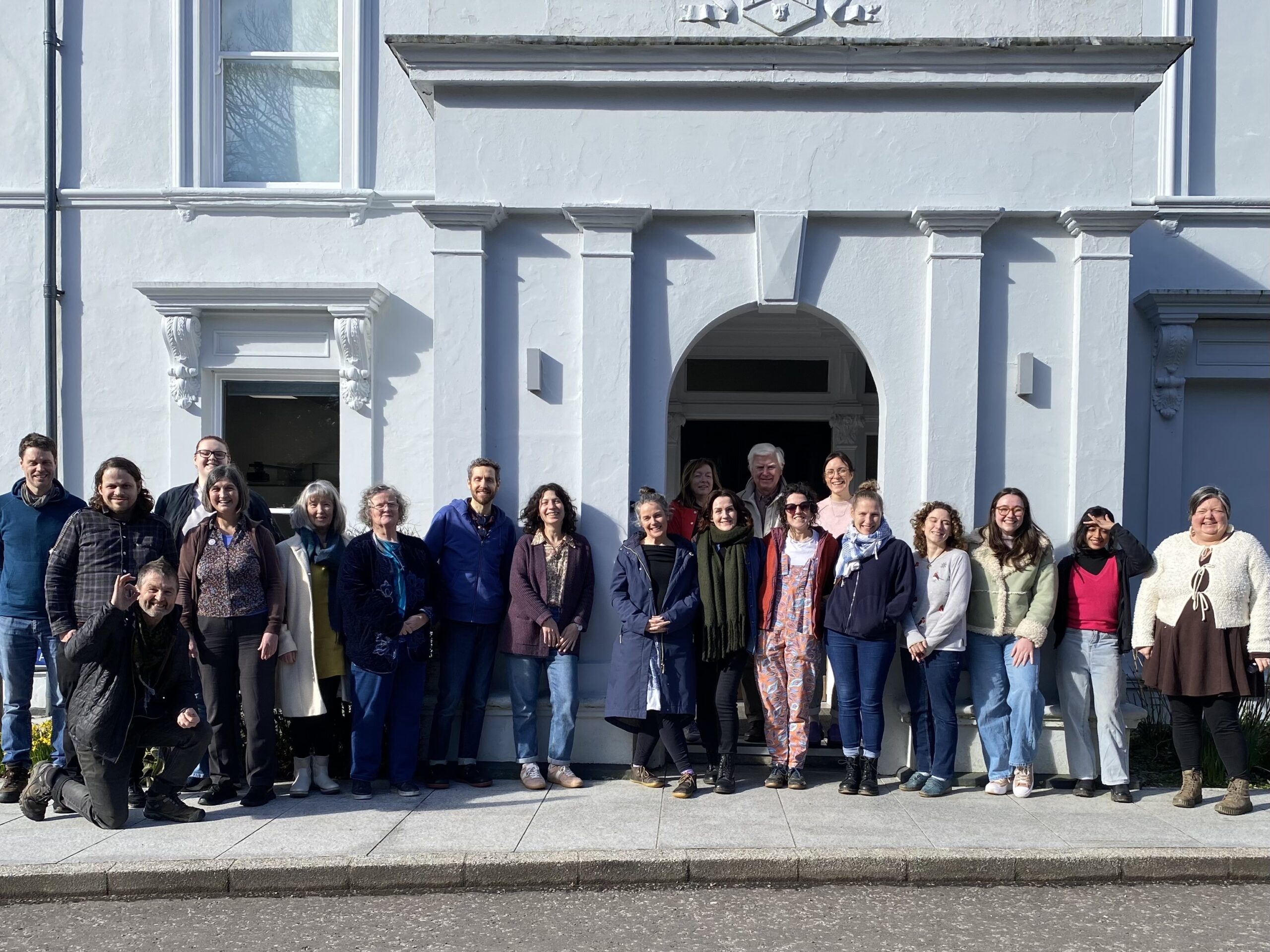
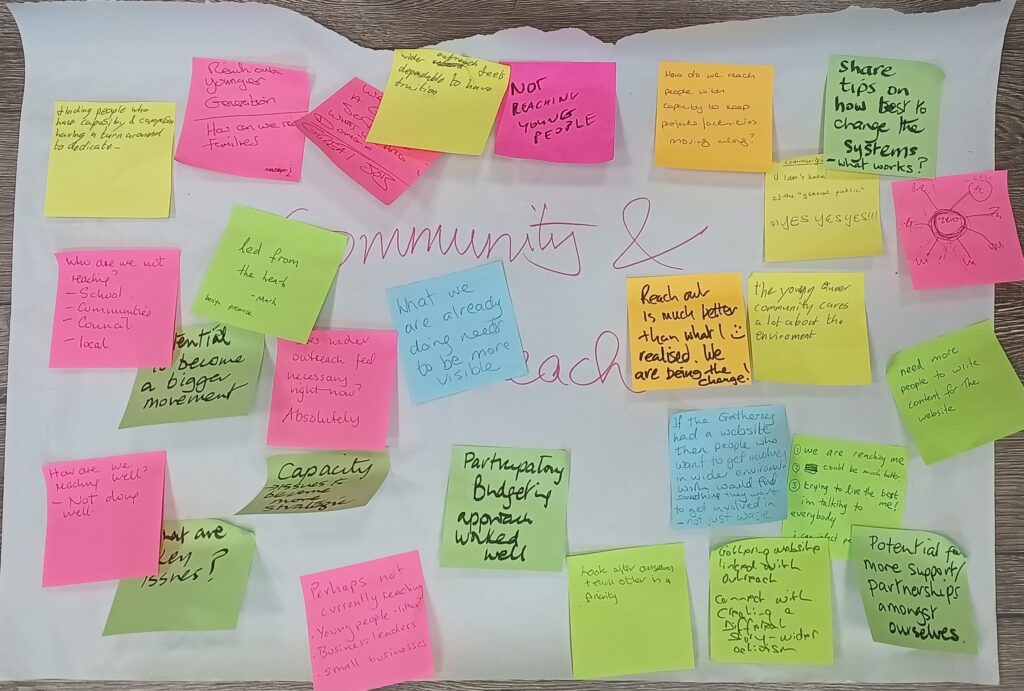
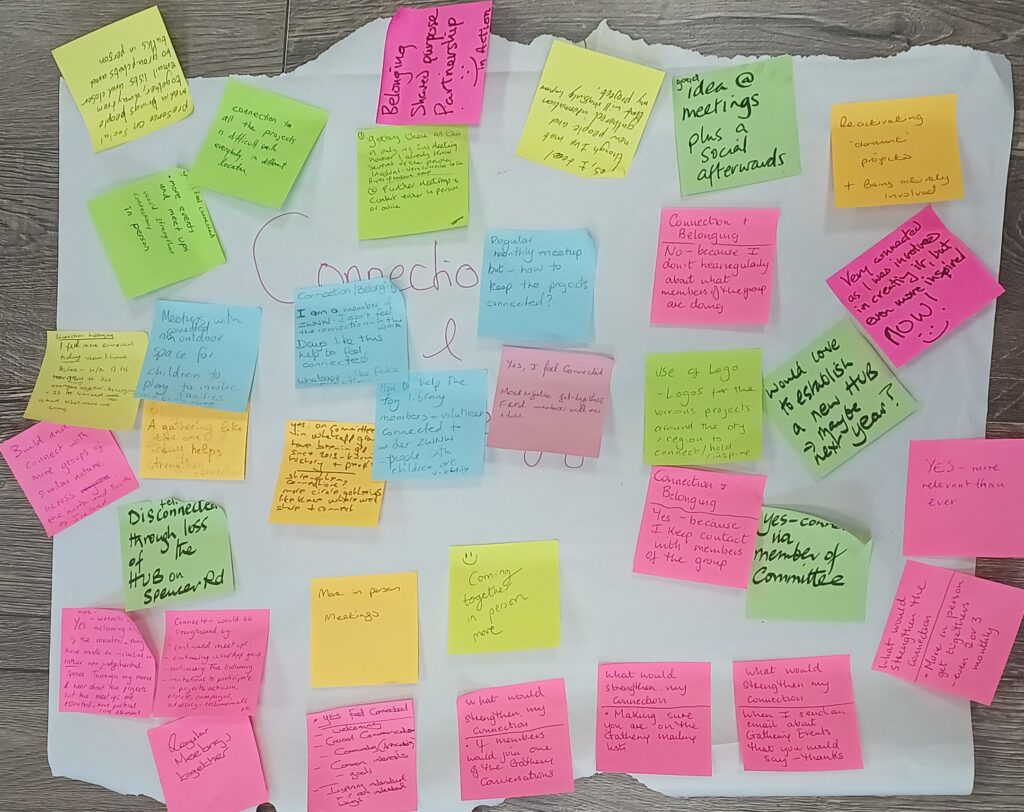
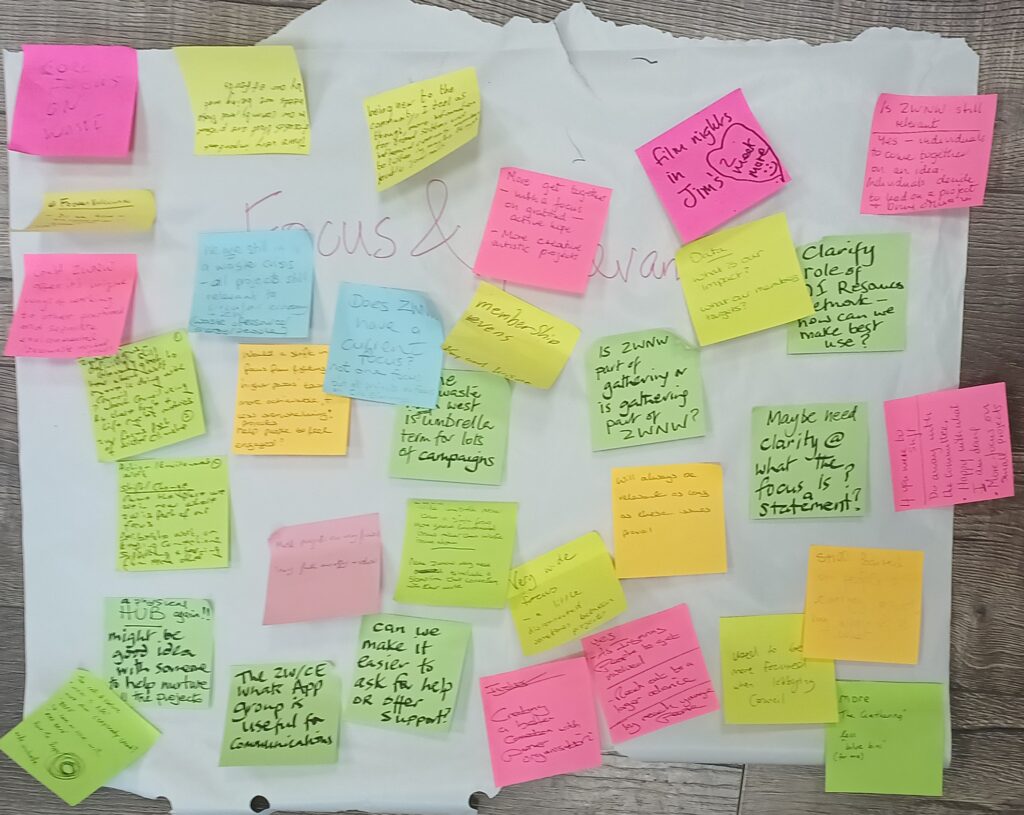
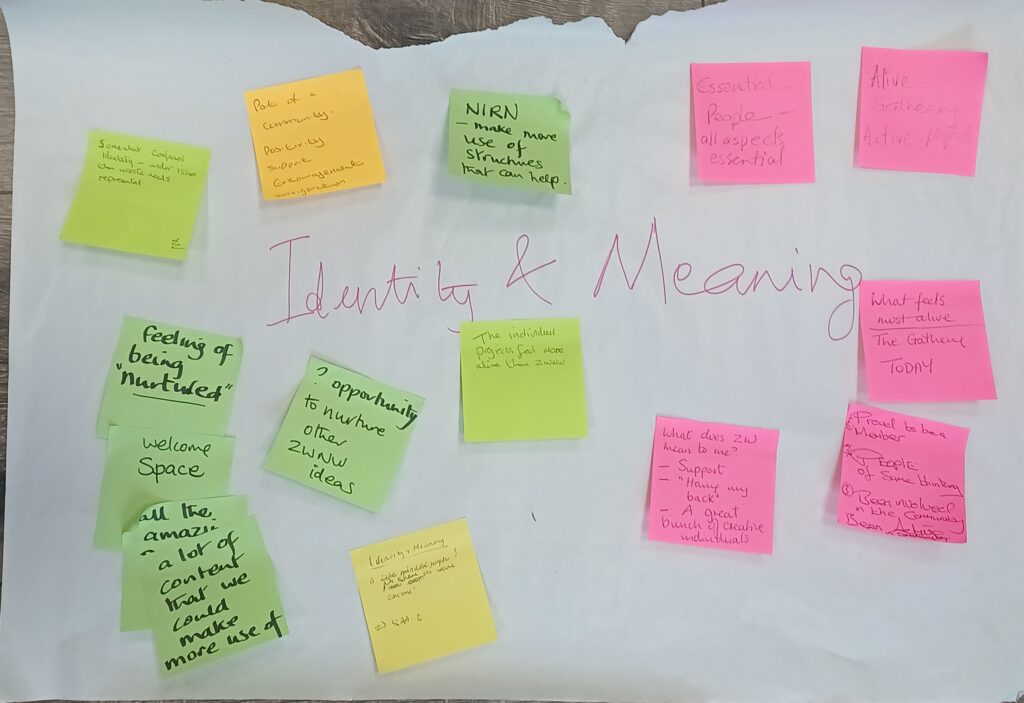
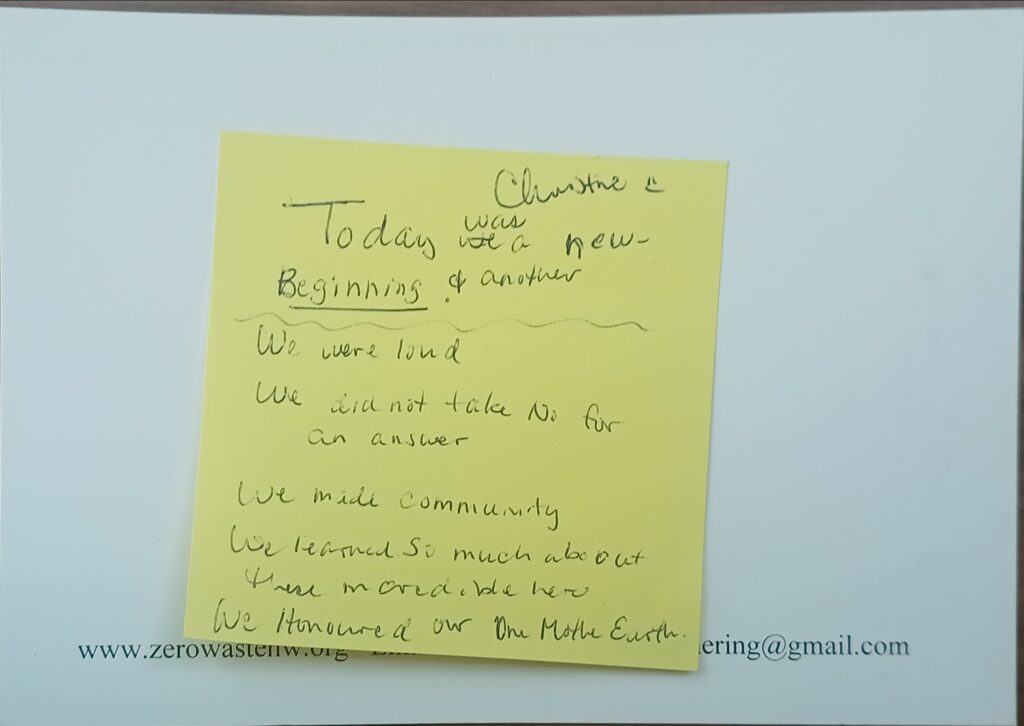
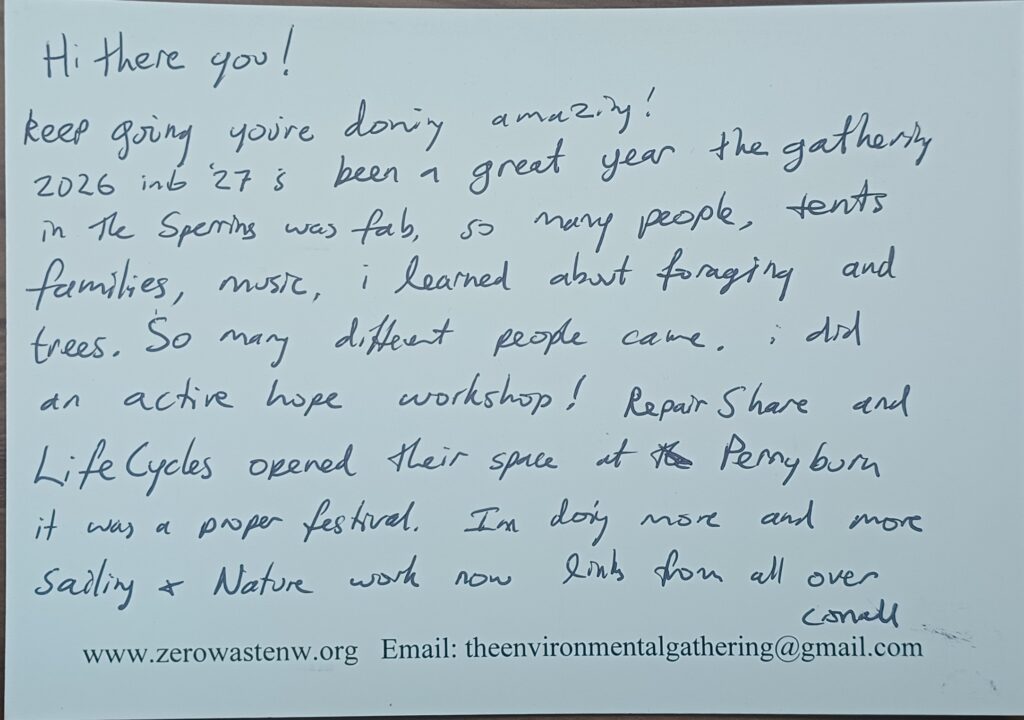
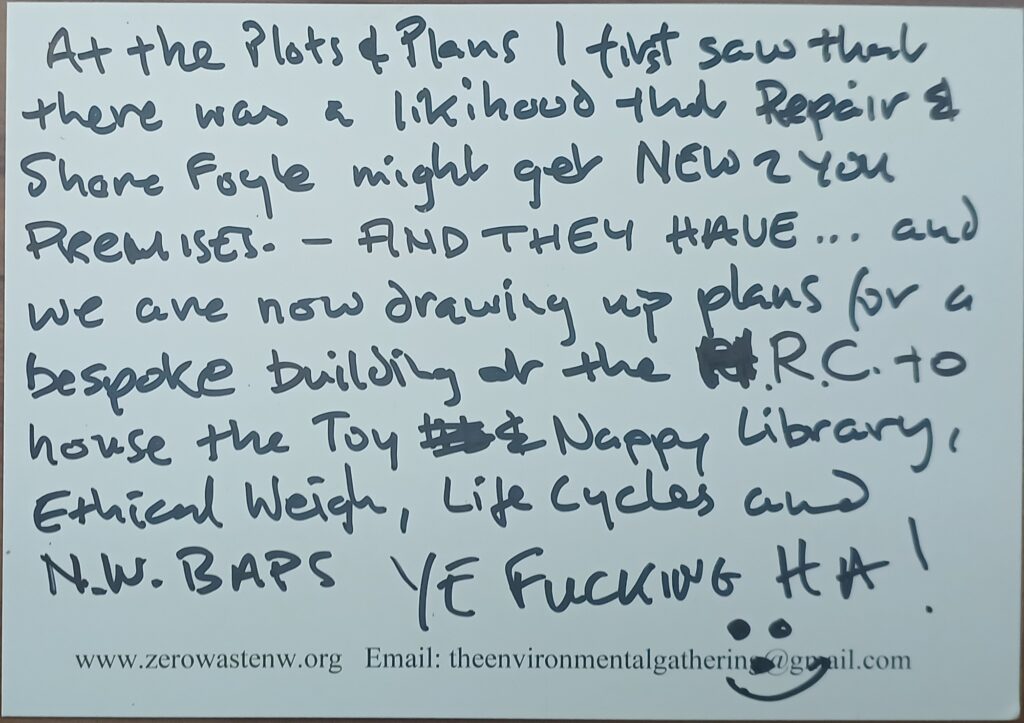
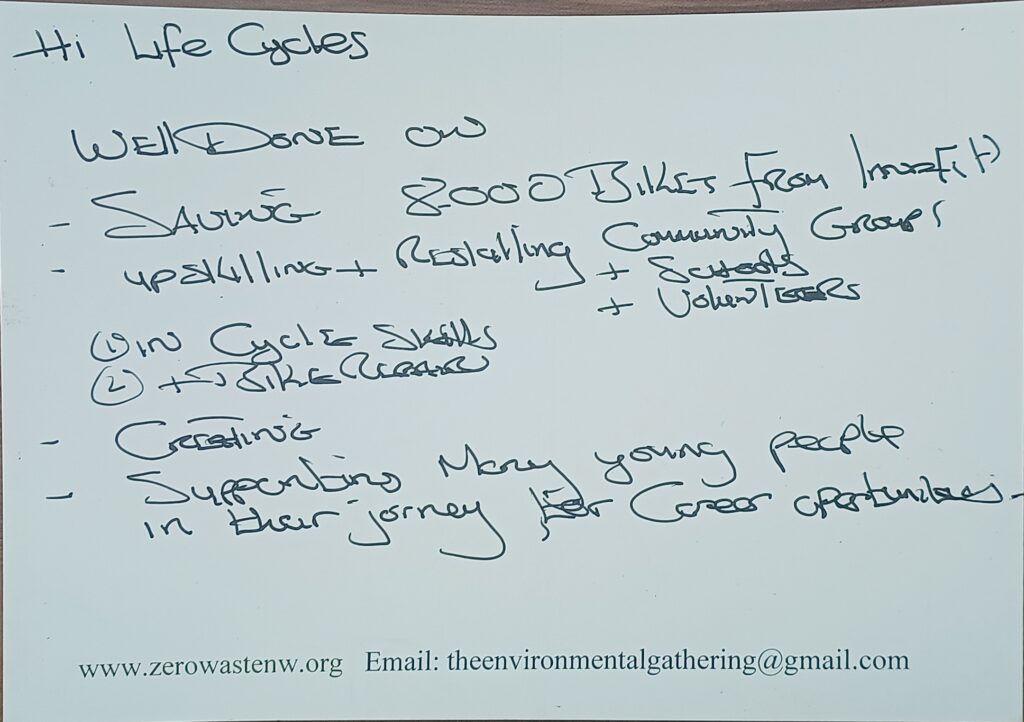
It was a nourishing pleasure to spend time with wonderful beings at our Plots and Plans events Saturday past, how lucky we are to have found each other! Thank you so much to our dedicated members and volunteers, project leaders and committee members (even me!) for all our work. Thank you to Kruti Kattige and Bryony Roberts at Think Pragmatic for your gentle guidance.
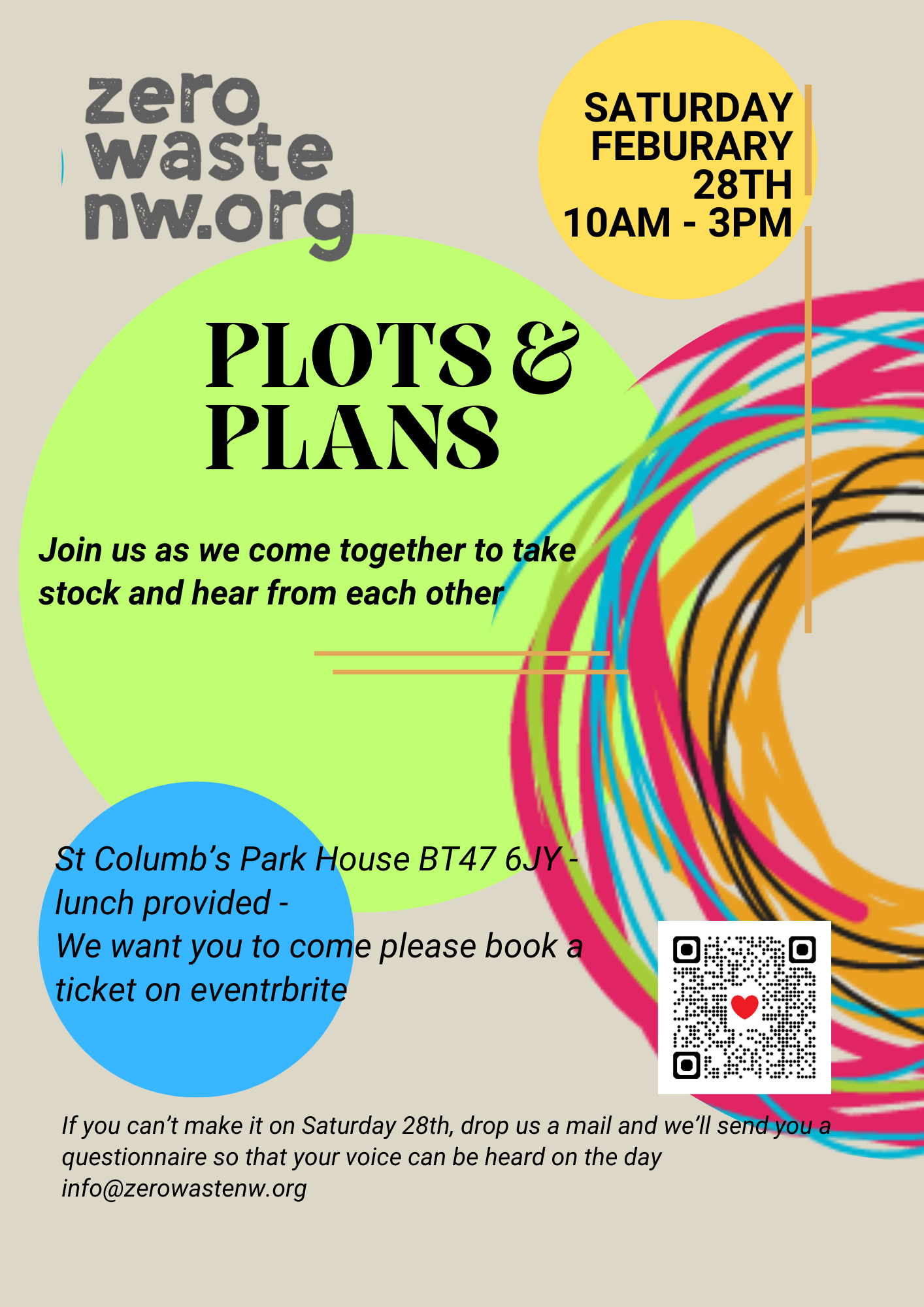
You are cordially invited to St Columb’s Park House on Saturday 28th February from 10am – 3pm for our Plots & Plans* event -coming together to hear from each other and take stock. We will have a delicious lunch together too.
In March of this year Zero Waste North West will be 13 years old. Since Inception we have been involved in so many fabulous projects and activities, we have made so many wide network connections. We continue to do great work. However, is our focus shifting? Do we need to formally acknowledge a shift to include wider climate/ justice/ rights? What is the important work that we do/ that you do?
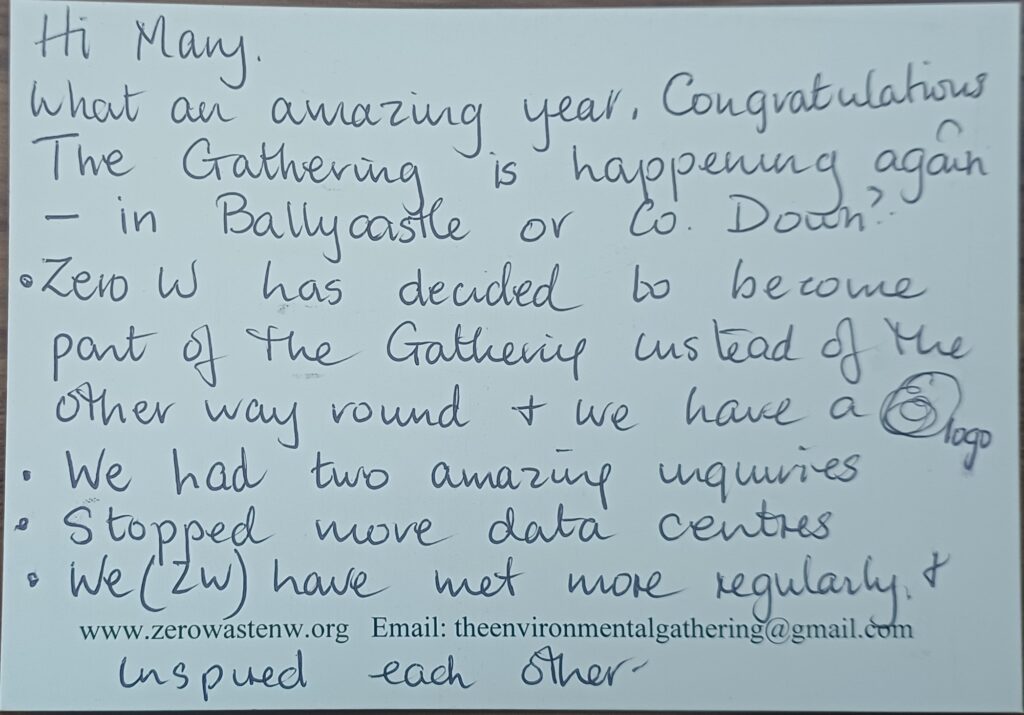
Please book your place on the Eventbrite link below to save your spot. We want you to come! If you are unable to attend the event on 28th for whatever reason we have a short questionnaire and a postcard for you to complete so that your voice can be heard.
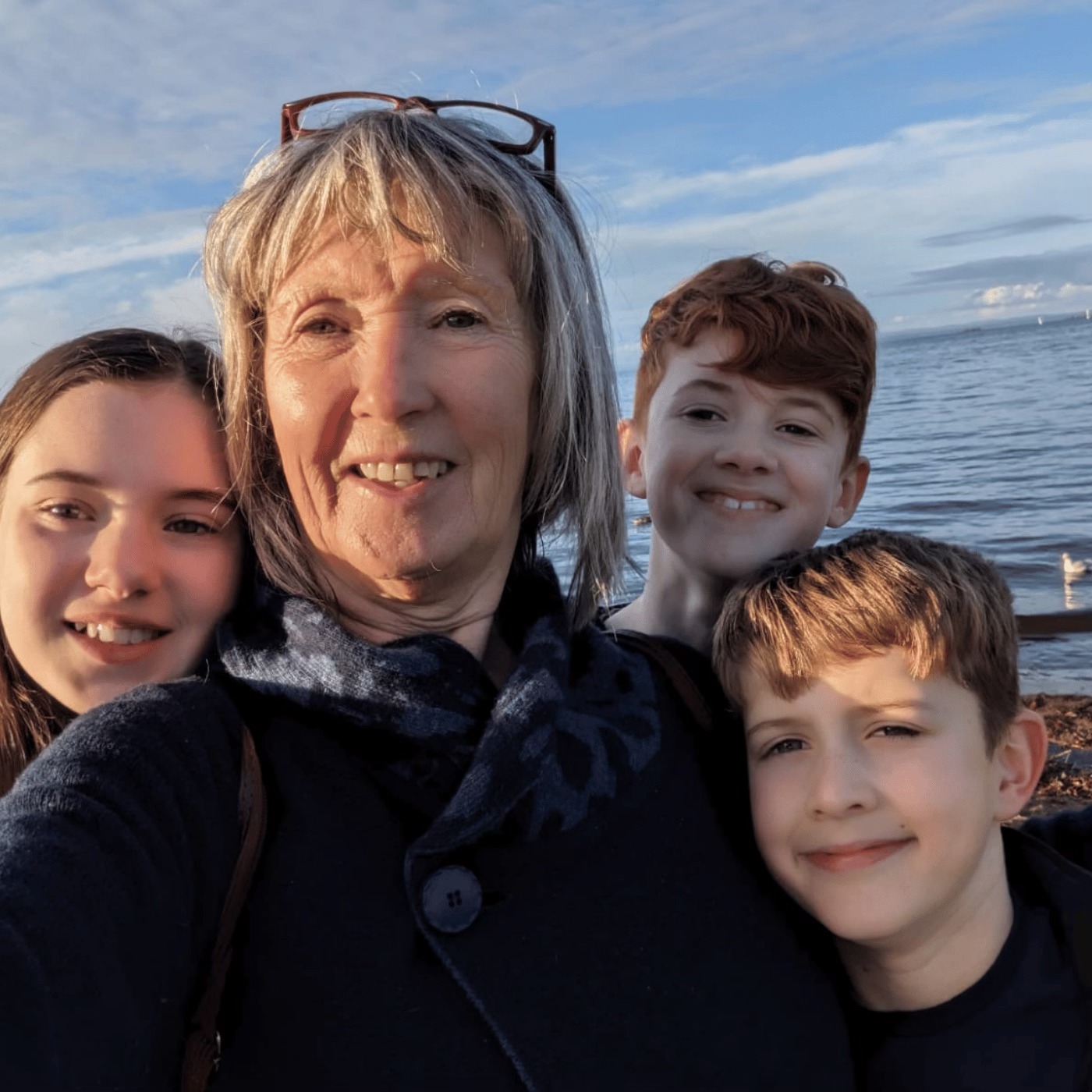
Mary McGuigan is one of them. Born in Derry, she’s a retired teacher, an Irish dancer and dance teacher, an activist, a mother and grandmother. She helped bring the Rights of Nature movement here to the North, and she’s been central to creating The Gathering, where activists from across Ireland come together to share, connect and support one another.
In this episode we talk about what drives her, what keeps her hopeful, and why joy, music and community are just as much a part of activism as protest.
Hard to believe that two months have passed since our beautiful Gathering in Moville this year and so much has been happening since.
But just to remind you, I have attached a short video and a synopsis of the day .written by Cedar Monroe, who travelled from the States via Cork to be be with us for his very first Gathering Event.. enjoy the memories or if you weren’t there SEE WHAT YOU MISSED!!
The Gathering started as a community response to The Illegal Landfill Site at Mobuoy on the Faughan River,outside Derry, from where we get our drinking water and on the 5th June, we saw 2 individuals get custodial sentences as a result.( 1st for environmental crime in N>Ireland,we believe.) We know we made a difference by our consistency in highlighting thiis environmental disaster over the last 12 years.
So Congratulations to us all and to all those who have supported us.
There remain many issues including the lack of a Public Inquiry. As a result we are looking at the possibility of a people’s/community Inquiry and have organized a public meeting to share information and discuss this possibility. This will take place on Wednesday 27th August in Holywell Trust Building in Derry.( More details to follow)
NIEA has launched the consultation on the remediation of the Mobuoy Site
They have planned two PUBLIC DROP-IIN Events,one iin Eglinton Community Centre on September 7th and the other in the Millenium Forum, Derry on the 7th September, both from 12-7pm.
( I have already requested an extension to the time to facilitate workers and also asked them to give a presentation in the evening on the consultation with a question and answer session as most of us won’t have read the consultation and even if we have, we probably don’t understand it!!)
It would be great if some more of you requested this also.
Many of us attended a wonderful SOS Celebration on Monday of this week…recognizing 10 years(though we know its more) of community spirit and determination to stop the mining in the Sperrins.We know .again. that this is not the end with more licences just having being granted by the DEPT of THE ECONOMY, despite huge public objection. BUT for now a massive CONGRATULATIONS .
Slí Éile is happening in the Sperrins on August 23rd, so look out for those details, enjoy your summer and celebrate!!
Ní neart go cur le chéile.
Mary
Sacred Waters
by Cedar Monroe
There is bitter irony in the fact that the Foyle catchment is threatened by large scale gold mining in the Sperrins. In the 19thcentury, a cache of gold was found on the shores of Lough Foylein Broighter. Included in the cache was a tiny, intricately made gold boat with oars, believed by archaeologists to be an offering to the Irish god of the sea: Manannan Mac Lìr, who has a special association with Lough Foyle.
At The Gathering in May, environmental activists from across the Island came together in Moville to begin a conversation around implementing Rights of Nature legislation for Lough Foyle. River Guardians of the Atrato River in Chocó, Colombia, Bernardino Mosquera and Alexander Rodríguez Mena, and other representatives from Colombian organizations, were guests and speakers at the event. They spoke about their successful efforts to secure the legal rights of the Atrato River, and the struggle since to implement those rights. They too were seeking to protect their river from gold mining and logging.
At a ritual to begin the day, the story of Manannan Mac Lìr and the little gold boat was shared. Attendees brought water from their rivers or local holy wells—and from as far away as the Atrato River— to symbolize the sacredness of each of their places. Each person poured their water into a large bowl in the center of the space, saying each time; “I carry [this water], I protect [this water], and I am [this water].”
I felt honoured to visit, as an international American student at University College Cork, where I am studying motivations for environmental action. Mary, one of the organizers of the event, gave me a warm welcome. As the day went on, regional organizations and fishermen shared their struggles. Fidelma O’Kane from Save our Sperrins pointed out that 27% of land in the Republic of Ireland was being prospected for gold, with 385 current prospecting licenses. The global rush for new minerals to feed our technological revolution is pushing multinationals to reinvest in extractive industry, with practices that threaten the soil and water of whole regions, like the Foyle catchment, for generations to come. A local fisherman noted that no one was listening to local people trying to protect their land and water, they were listening instead to multinationals seeking a quick profit.
The organizers of the 20th Gathering called it “From Colonisationto Community through Rights of Nature.” Throughout the day, there were references to the long experience of colonisation in Ireland, including Eamon McCann recounting how the forests around the Lough were felled centuries ago by British colonial powers. This experience of colonisation is shared by Chocó, a region colonised by Spain for several hundred years, and currently facing large scale logging and illegal mining. Presenters from Colombia explained how Afro-Indigenous communities, the most marginalised community in Colombia, have gained legal rights to territorial autonomy and self-rule in 1991, rights that enabled them to obtain court recognition of the legal rights of the Atrato River. From that ruling, they have developed a plan over a long period of community consultation to take concrete action to preserve the river and the support the people who live on it.
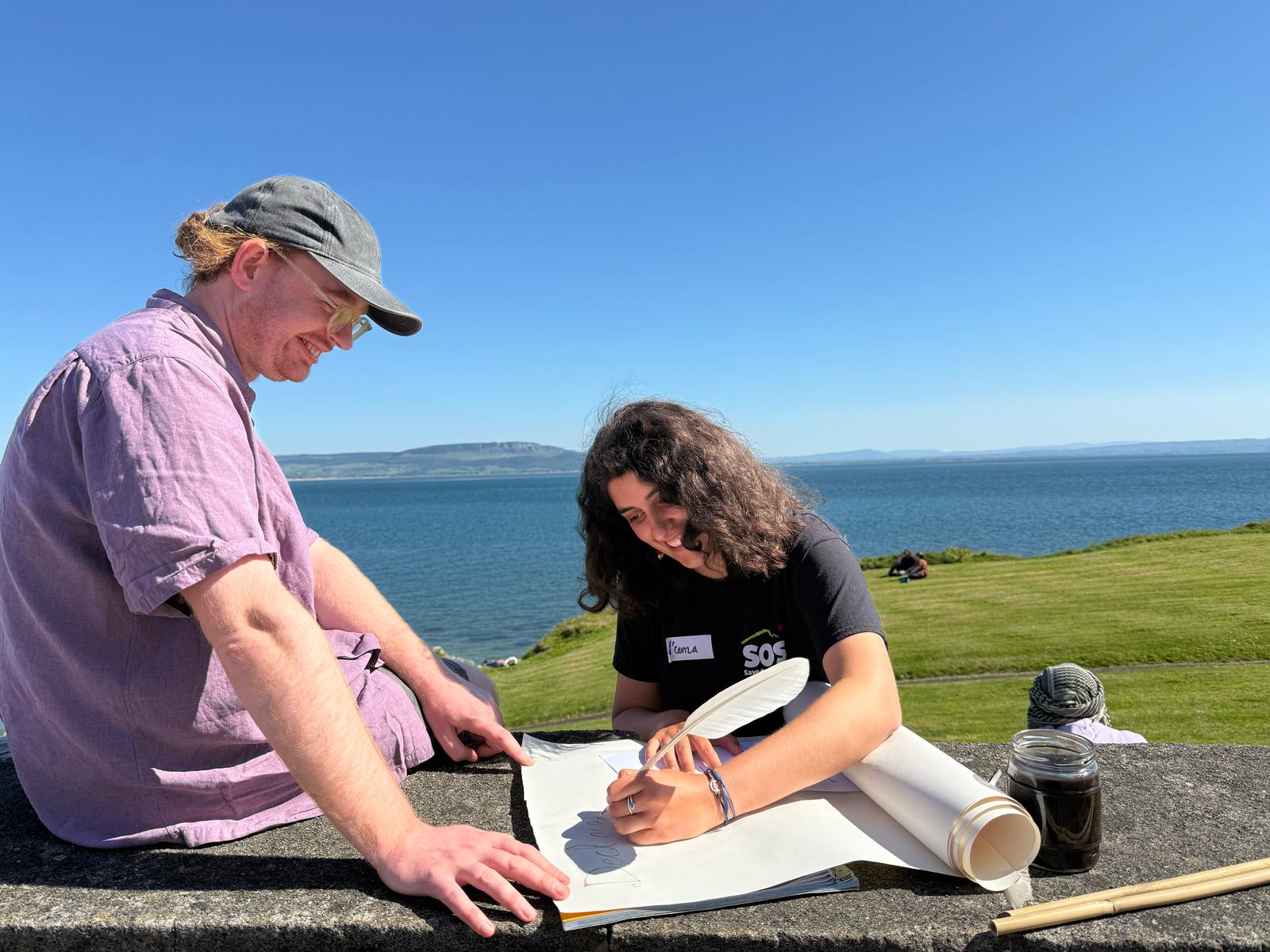
As the meeting came to a close, people were asked to sign a document asserting the Rights of Lough Foyle, as a first step in a long process to protect the waterway and the people who make their home on it. It was written in oak gall ink, made that day from the water we had brought and placed in the center of the circle during the opening ritual.
As we had sung, people were fighting to prevent the return of the days when “do dhúiche bhreá i seilbh méirleach” (our fine land was in the possession of thieves). Perhaps the Manannan evoked at the opening ritual will lend a hand to protect the land and waters where he was once gifted a finely crafted little gold boat—one that did not require a mine that will leave a 54 metrehigh toxic waste dump to run into the catchment.
On the gorgeous shores of Lough Foyle, I felt the power of people coming together—from Colombia to Inishowen—to resist new threats to our precious landscapes. We ended the day with a song led by The Henry Girls, in support of Palestine, another colonised people facing the utter destruction of their homeland. The Lough sparkled under the rare Irish sun as we walked out of the meeting hall in song, reminding us that all is not lost if we can keep fighting the powers that seek to destroy us for profit.
It was a fabulous afternoon at Ethical Weigh for the PB Marketplace Event. We got together for some food and then each made our PB pitches. Photos coming soon. Here is the PB Evaluation Form please fill it in when you can.
Talk with Chris Fremantle: Artists, Woods, Forests & Living Systems
Thursday 13th March 2025, 5.30pm – 7.30pm, at Void Art Centre
What does a forest planted by an artist look like? Should you be able to tell that it’s art? This question was posed by the Scandinavian magazine Kunstkritikk in relation to a project involving an artist working with a community to create a new woodland.
Join Chris Fremantle, a researcher and producer, for a talk that reflects on this question. Chris will present on issues that have emerged across arts and forestry, unearthed during his research on significant regional, national and international targets for woodland creation associated with cultural production.
Find out more about Chris and book to attend this free talk by clicking here
Conall’s description of our Normalising Climate Action Participatory Budget (PB) sums it up!
The PB gives the ZWNW team a framework for sharing and discussing ideas and also a voting system for deciding on which ideas to take forward, kind of like Dragons Den with a voting system similar to the one used in the Eurovision.
Ideally we would have had a series of Citizens Assembly information sessions and discussions about different voting systems, followed by a democratic vote on which system to use, but for this PB I am offering the Modified Borda Count (MBC) – because I once went to a workshop on MBC in St Columb’s Park House and ever since have been trying to convince people to let me try it out.
I am looking forward to heated discussions on voting systems afterwards:)
I like structure, just enough agreed structure so that communication and decision making is transparent and inclusive.
MBC provides a voting structure which opens up thinking and engagement with an incentive to give at least some consideration to all options. The result reflects the choices of everyone involved and is less likely to lead to a binary winners/losers outcome.
Here is an example:
There are 3 options red green orange and five voters. Each voter is encouraged to rank the options 1-3 with 1 being their first preference.
Ballot Paper
green
orange
red
Voter one
3
2
1
Voter two
2
3
1
Voter three
1
2
Voter four
3
1
2
Voter five
1
Voters three and five ignored the encouragement..
The part I like best is the tally. When a voter ranks all 3 options, their first preference gets 3 points, 2nd preference gets 2 points and 3rd preference gets 1 point. (I haven’t watched the Eurovision for a long time but I always hear this in French – un point). Voter Three only ranked two options so their first preference gets 2 points and their second preference gets 1 point. Voter Five’s first preference only gets 1 point. They didn’t listen.
Tally
Green
Orange
Red
Voter one
1
2
3
Voter two
2
1
3
Voter three
2
1
0
Voter four
1
3
2
Voter five
0
0
1
Totals
6
7
9
The attached article gives an example of the MBC system used in Ireland in 2017.
And there is more information on the website of the De Borda Institute which is coordinated by Peter Emerson from his home in Belfast – when he isn’t travelling around the world on his folding bike advising on voting systems.
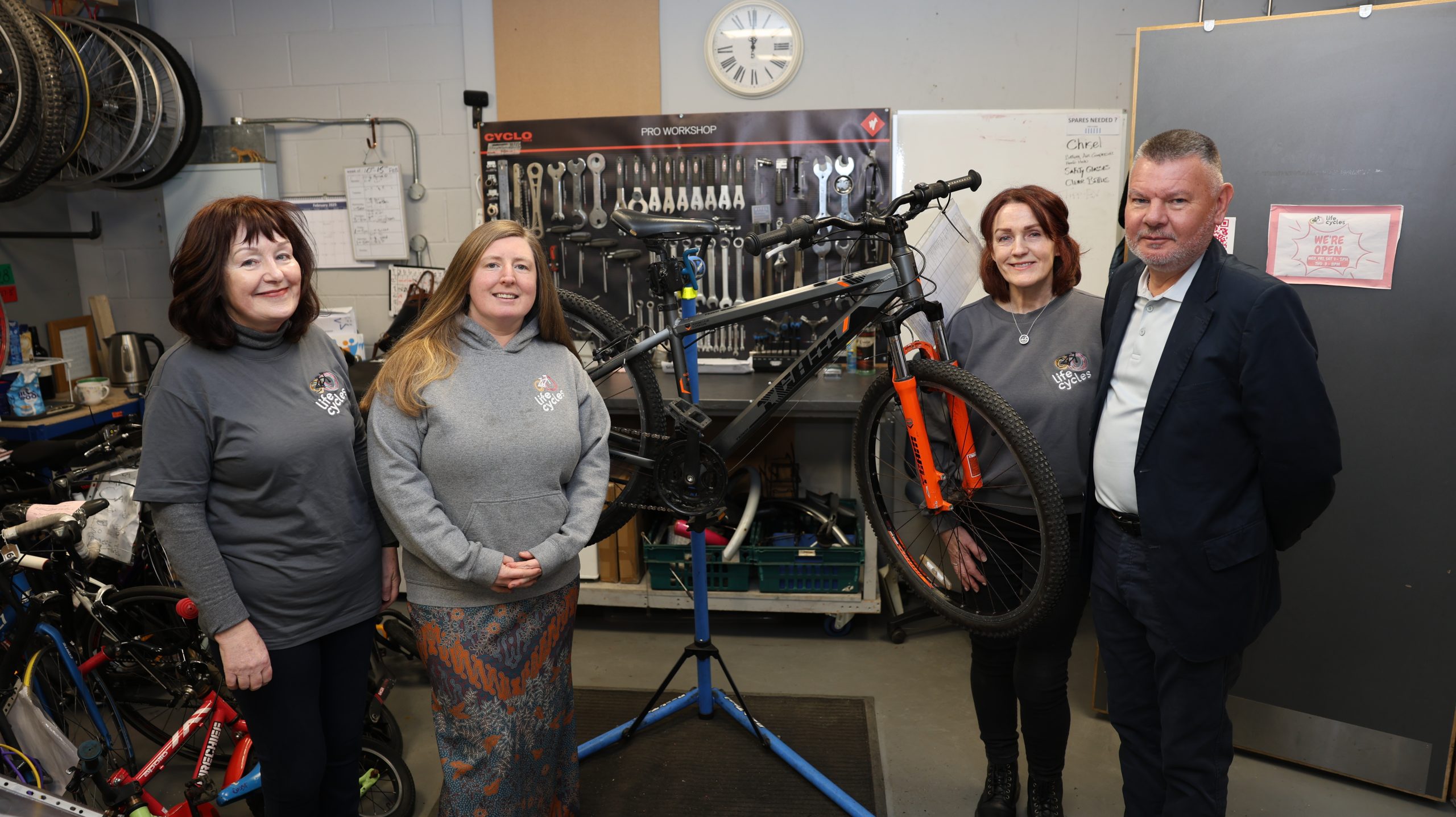
Life Cycles is thrilled to announce that it has been awarded £20,000 from The National Lottery Community Fund to support its transformative new project, “Pedal Powered: Reviving Communities Through Bike Refurbishment.” This initiative will provide refurbished bicycles, cycle training, and maintenance workshops to individuals facing transport barriers, particularly those from disadvantaged backgrounds.
With rising transport costs impacting many local residents, this project will offer an affordable and sustainable solution, helping people access employment, education, and community activities while promoting active travel and environmental sustainability.
Kate Beggs, Northern Ireland Director of The National Lottery Community Fund said: “Congratulations to Life Cycles NI on their £20,000 National Lottery grant. With many people struggling with the rising costs of living, this project will make a big difference in their daily lives, helping them to travel in a low-cost and environmentally friendly way.
“National Lottery players can be proud to know the £30 million they raise each week for good causes, is making such a difference to people in Northern Ireland.”
“We are delighted to receive this funding, which will allow us to expand our bike refurbishment programme and directly support those in our community who need it most,” said Monica Downey, Project Manager of Life Cycles. “By providing access to bicycles, safety equipment, and essential cycling skills, we hope to create lasting change by empowering people with independent and low-cost transport options.”
Through the funding, Life Cycles will refurbish 100 donated bicycles, ensuring they are roadworthy and safe. Beneficiaries will also receive essential bike safety kits—including locks, lights, high-visibility vests, bells, and pumps—along with cycle skills and bike maintenance workshops to give them the confidence to ride and maintain their bicycles.
About Life Cycles
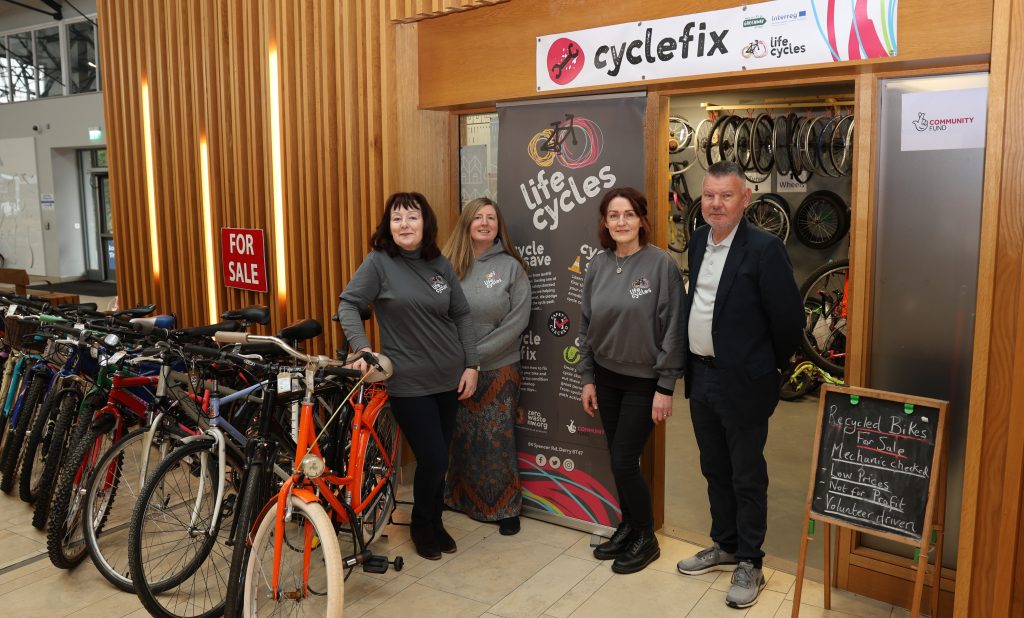
Life Cycles is a volunteer-driven social enterprise based at the train station in Derry/Londonderry, where we sell affordable, refurbished bicycles in partnership with Translink and Sustrans. We accept donated bikes at our bike drop-off point at Pennyburn Recycling Centre, in partnership with Derry City & Strabane District Council (DCSDC), helping to reduce waste and promote cycling.
Life Cycles started out in Monica’s garage during the COVID-19 pandemic, as a Zero Waste North West initiative. Since June 2021, 5,000 bikes have been recycled, diverting approximately 60 tonnes of waste from landfill—giving bikes a second life and making cycling accessible to all.
We are always looking for volunteers to help with bike refurbishment, community outreach, and events. If you’re passionate about cycling and sustainability or just want to be part of a friendly team, get in touch!
Join the Team – We’re Hiring a Project Coordinator!
As part of this exciting expansion, Life Cycles is looking to recruit a Project Coordinator to oversee the successful delivery of the Pedal Powered initiative. This 12-month, part-time role (14 hours per week, hybrid/flexible working) will involve managing project activities, engaging with the community, coordinating volunteers, and ensuring the programme runs smoothly.
For more information on the job role and how to apply, visit: indeedhi.re/4i0Occf
A Huge Thank You to The National Lottery
Life Cycles extends its heartfelt gratitude to The National Lottery Community Fund and National Lottery players for making this project possible. Their generous support will enable us to change lives, build stronger communities, and create a more sustainable future—one bike at a time.
If the world is to be healed through human efforts, I am convinced it will be by ordinary people, people whose love for this life is even greater than their fear.
Joanna R. Macy
‘PB has a pedagogic function, to bring citizens together, demand discernment and a critical spirit of them, reinforce their neighbourhood ties, commit them to social justice and expand their perception of the world, so that, starting with the neighbourhood, they can understand that we live in a global village, in which the survival of future generations depends, today, on our ability, to administer it well, following the practice of globalisation of solidarity.’
Frei Betto, philosopher of liberation theology and advisor to social movements in Brazil.
What’s the Big Deal with Participatory Budgeting (PB)?
I think of PB as a way of practising democracy. ‘Communal self-governance, decision making by public discussion’ was the practice in many communities of people throughout the world long before the word democracy started being used to describe representative governance (often not representing everyone!).
For me democracy is a group of people being deliberate and active in designing systems for decision making, communicating, encouraging and supporting involvement – with built-in systems for reviewing the whole process and learning from it.
The Zero Waste North West team have been practising democracy from our early days when we set up our system of autonomous subgroups. Our more recent Ways of Working Agreements outline a simple transparent system for looking after ourselves and each other – and they are open to everyone to review in January each year.
ZWNW also made the decision to be a legal entity with a constitution, charitable status, a bank account, insurance and required policies. And so we work within the regulations drawn up by other groups of people.
We could at some time decide to stop being a legal entity and still continue to practice democracy.
I personally am also happy seeing what we do as practising anarchy ‘a system in which all members are equal in terms of authority’. I am realistic enough to know that both democracy and anarchy can be chaotic and infuriating and require a big commitment of time and energy. I am also lucky enough to know how great it is to be part of this energetic group of people who are actively engaged in thinking about, trying out and choosing systems which work for us – and checking regularly to see if they are still working. We are building solidarity and support networks. And we need them.
Participatory Budgeting (PB) is a tool which is used by statutory and community groups. It was started by a local authority in Porto Alegre Brazil in 1989 as an anti-poverty measure. The New York Times calls PB ‘revolutionary civics in action – ‘it deepens democracy, builds stronger communities and creates a more equitable distribution of public resources.’
Community Places have been giving support to people running PBs in NI since 2017. The ZWNW PB process is following the guidelines of the PB Charter and using the toolkits and resources on the Community Places website.
Benefits from the PB process include working together to prepare bids; getting to know others and letting them get to know about you; letting others know what you would like to do while hearing the same from them; delivering a fun and transparent way to support good things happen. Done well, PB can strengthen a network of relationships on which future collaborations may be built while delivering immediate concrete actions.
Normalising Climate Action: exploring ways to connect with communities we are part of and communities we aren’t part of – so we can all learn from and understand each other.
For the Normalising Climate Action PB, Maria Herron and myself are the design team – which means we can’t submit a bid this time. We are supported by Anjuli Grantham, Maeve Leahy, Marcella Di Palo and Conall Morrison with feedback and tech support. And also supported by Noeleen Diver from PB Works who has wide experience of PBs. Thank you! Maria and I have agreed to use ‘consent’ as the basis for our decision making.*
As members of ZWNW we take it for granted that climate activism is part of our lives. For a lot of people we know it is just too overwhelming to even begin to think about taking action for change. This PB pot of £6,000 is available for proposals which explore ways of involving our friends, family and community in the journey of learning, connecting and building ways of working together to create new possibilities which care for people and our planet.
Bids can be submitted on the form below until March 14th. If anyone has any questions please contact marian@zerowastenw.org and we can arrange a chat.
There will also be an online support meeting Wed 19th Feb 6pm.
I am looking forward to finding out what the ZWNW team comes up with J
Marian Farrell
16th Feb 2025
The PB funding comes from the Artitude: Climate, Culture & Circularity project, funded by National Lottery Climate Action Fund.
*Without having named it as ‘consent’ this is the practice ZWNW has always used – if someone has an idea and is willing to put time and energy into making it happen, then the rest of the team will give consent and support if possible. The only times that consent won’t be given is if the idea would be harmful to anyone or damaging to the work of ZWNW. I am very happy to talk about what I know of ‘consent’ as it is defined and used in sociocratic decision making. If you are interested, please get in touch.